In a previous article we discussed the structure of 7th chords along with the major and dominant varieties. With that understanding, we can dive into chord inversions of 7th chords.
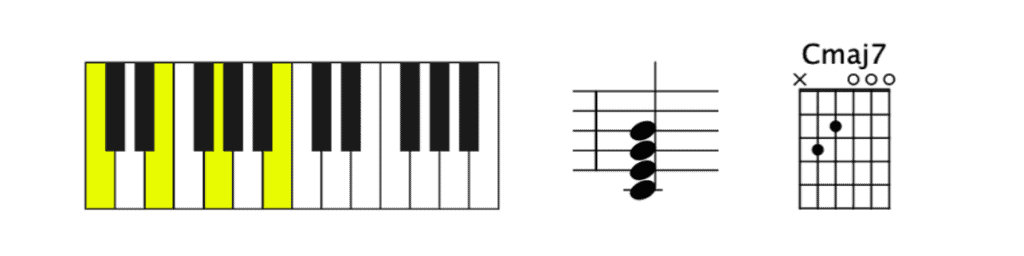
Previously we began with a Cmaj7 chord, so let’s keep that as a reference as we proceed down the path of inversions.
What are chord inversions?
An inversion is where a different note that is a part of the chord becomes the lowest sounding pitch when the chord is played. For example, instead of C being in the bass, the E is the lowest pitch. And, as with triads, inversions are referred to in order of moving the notes up the scale. So Cmaj7 is C E G B. First inversion is E G B C, second inversion is G B C E, and third inversion is B C E G. Three note triad chords only have two inversions, but adding a fourth note to the mix means we net an extra inversion.
Notation of chord inversions
There are a couple ways to notate inversions of 7th chords. First, we’ll look at figured bass notation. While not the most common notation in modern music, figured bass notation can help us with understanding how the inversions work and can help cement other music theory concepts.
Before we proceed, consider this phone number: 765-4342
Here’s why:
- If the root of the chord is in the bass (in this case, the pitch C) it is simply called a 7 chord.
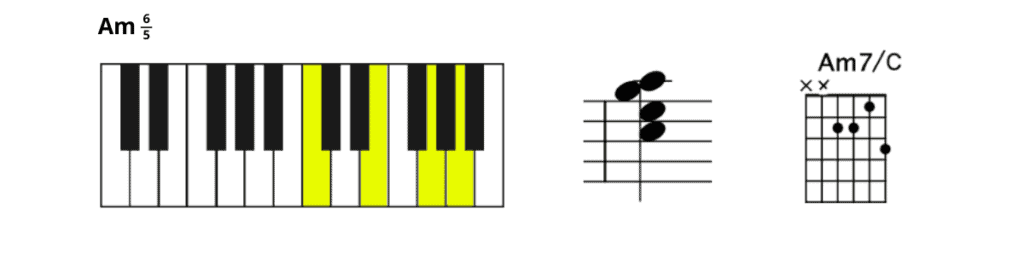
- If the 3rd of the chord is in the bass (first inversion) it is called a C 6/5 chord.
- If the 5th of the chord is in the bass (second inversion) it is called a C 4/3 chord.
- And if the 7th of the chord is in the bass (third inversion) It is called a C 4/2 chord.
In the notations with two numbers separated by a slash, the first number refers to the position of the root and the second number refers to the position of the seventh in the chord. In a Cmaj7 chord, the individual notes are C E G B. So if we see C 6/5 as the notation for a chord, we know that the root is a sixth above the bass and the seventh is a fifth above the bass. The only order of C E G B that fits that description is E G B C. Like any notation, figured bass takes time to adopt, but it puts a lot of music theory in a small package.
The second way to notate inversion of 7th chords is with slash chords. If you’re playing from modern guitar charts, you are probably familiar with this notation. In slash chords, you always see the chord name, a slash, and the bass note. So a Cmaj7 in first inversion (3rd of the chord in the bass) would be notated as Cmaj7/E. You know that you are playing the notes of a Cmaj7 (C E G B) starting with E, so E G B C.
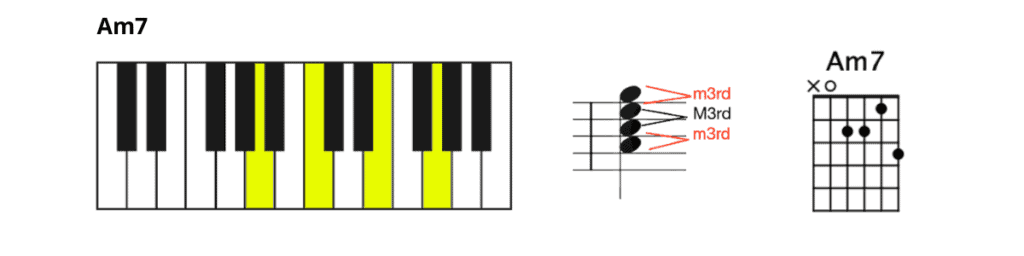
Let’s switch up the chord to an Am and see how the different inversions and notations look.
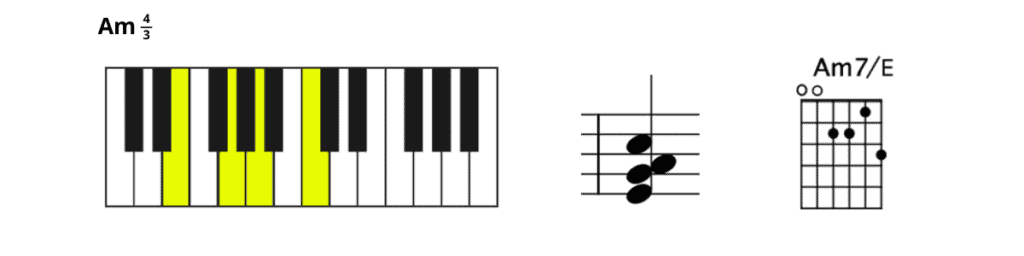
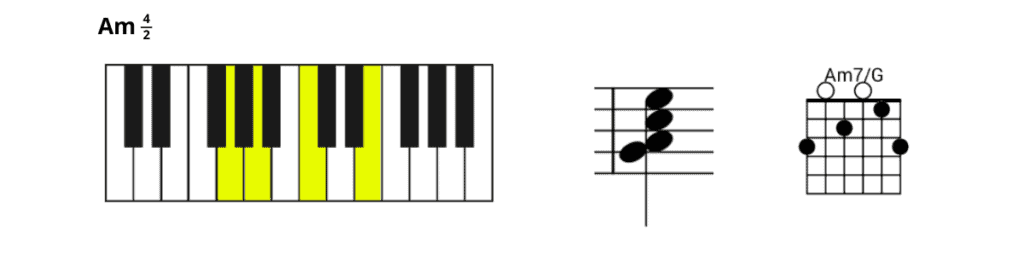
Why use inversions?
Using inversions can help change the mood of the chord, progression, and song. and can also help move the melody or chord progression forward. There are moments when using the chord in an inversion just feels better in a series of other chords. One of the most useful applications of inversions is as a method of keeping chord tones close together in chord transitions.
See below for an example of a chord progression that utilizes a 7th chord inversion to provide a smooth transition for bass notes stepping up and the top notes following suit. Without the inversion, the G7/B or G 6/5 chord would have a bass note lower than the Am. Certainly not the end of the world, and perhaps even what you want as a composer, but the inversion gives us another tool in the box for crafting music that works for us.

Understanding how inversions work and being comfortable playing them — whether with 7th chords or any other chord structure — can help with improvisational playing for many instrumentalists. Even if you’re only playing chords provided on the page, knowing the basics of inversions help you better connect with the music you are playing and how it’s structured.
Written by Ray Mullins, a CLEF supporter who has served in music ministry and music education for two decades. He is a music teacher in Tennessee and volunteers as a music minister in various parishes in the Memphis area.
Copyright © 2026 Catholic Liturgical Ensemble Formation.
Looking for more resources? Search our full online library of CLEF Life resources, or sign up for CLEF Life email updates to receive the latest resource in your inbox once a week.