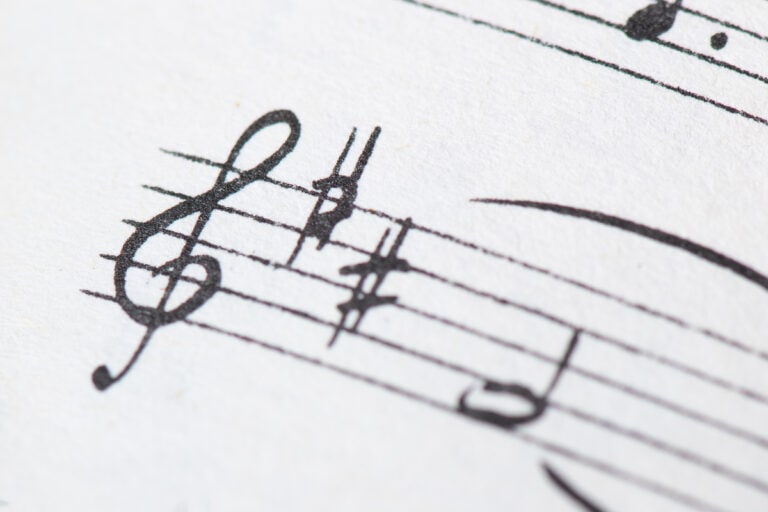
Over a thousand years ago, music notation began with monks writing which pitches belonged to which word on giant sheets of parchment. In the early days of music notation, they simply marked dots in the blank space between lines of text. This allowed the singers to have a rough idea of which direction the melody went — up, down, or same note.
Over the centuries, this evolved into a system of horizontal lines to establish where specific pitches of music would permanently be placed. This allows for anyone who knows the basic rules of Western notated music to be able to play, sing, and perform from a printed page. These five horizontal lines are called the staff.
To accommodate singers who can sing a higher register or instruments that play in a higher register versus those of a lower register, we use symbols placed at the beginning of the staff lines to label it. The most common symbols used are treble clef (or G clef) and the bass clef (or F clef). We’ll talk about other clefs in a later article.
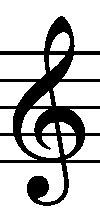
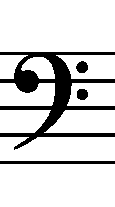
With a little imagination, one can see that the treble clef resembles a cursive upper-case G, and it encircles the line which designates the note G. The bass clef line resembles an F, and the two dots surround the line which designates the note F.
How does this translate into what we read when we see a staff, a clef symbol, and notes on the page? Here are the notes placed on each staff with their pitch-letter designations:
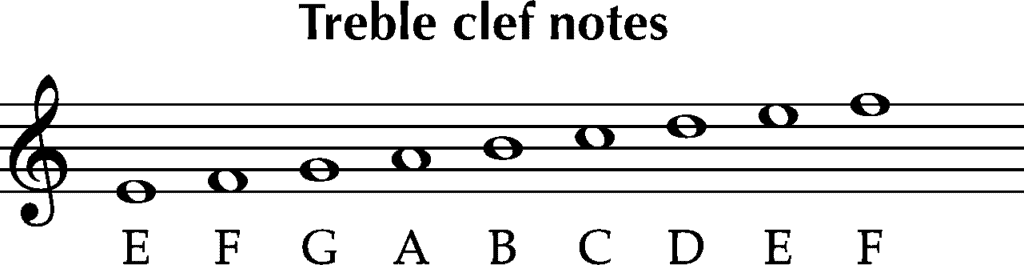
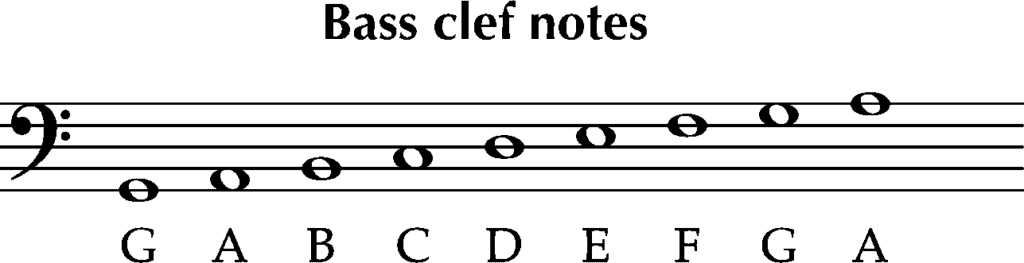
Memorizing the note names (letters) and their placement on the staff is a beginning step in learning music theory and how music works. This is true of both what we hear when music is played and how it is communicated through music notation on the page.
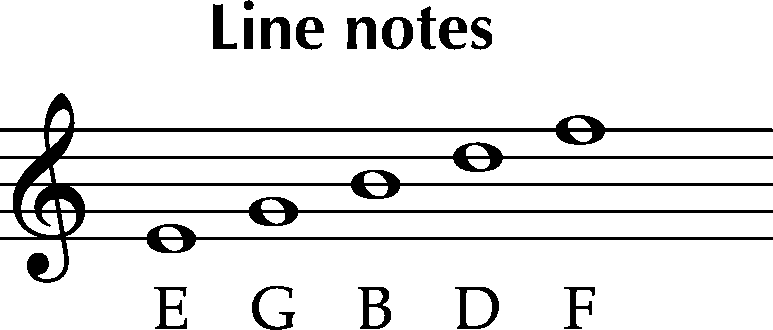
For the treble clef, a couple mnemonic devices can help you remember the order of notes.
The line notes from bottom to top form the first letters of the words in the sentence Every Good Boy Does Fine.
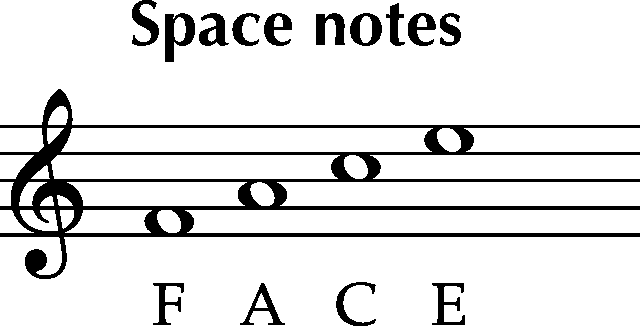
The spaces from bottom to top spell the word FACE.
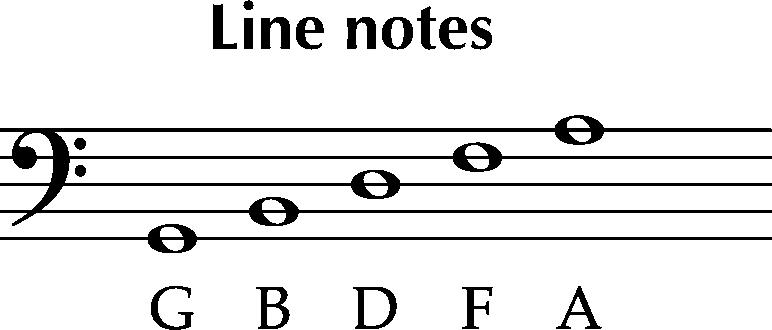
Similarly for the bass clef, the line notes from bottom to top form the first letters of the words in the sentence Good Boys Do Fine Always.
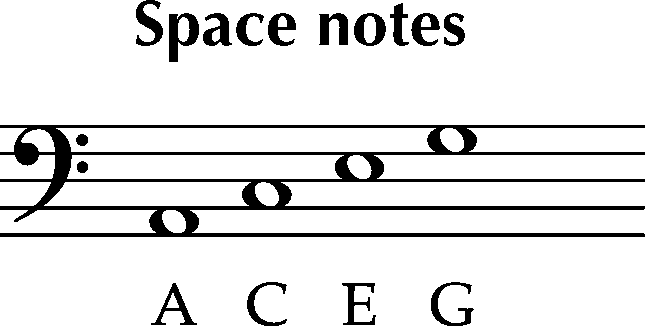
The notes of the spaces can be used in the sentence All Cows Eat Grass.
That’s a quick overview of some music notation basics. In our next article, we’ll talk about what happens when notes go above or below the five lines of the staff. Stay tuned!
Written by Ray Mullins, a CLEF supporter who has served in music ministry and music education for two decades. He is a music teacher in Tennessee and volunteers as a music minister in various parishes in the Memphis area. Graphics by Christian Cosas.
Copyright © 2026 Catholic Liturgical Ensemble Formation.
Looking for more resources? Search our full online library of CLEF Life resources, or sign up for CLEF Life email updates to receive the latest resource in your inbox once a week.